At Pendulum, plan mode is the single biggest force multiplier in our workflow. Not AI itself - but the structured planning that tells AI exactly what to build, in what order, with what constraints. The difference between a useful AI output and a hallucinated mess is almost always the quality of the input.
Because the twenty-minute scaffold becomes a two-week debug. Every time.
What plan mode actually looks like
Plan mode is a deliberate phase where we define the architecture and map the problem space. We identify which parts of the build have known solutions and which require genuine engineering. We write the plan in a format that an AI assistant can consume directly - structured, specific, and unambiguous.
- Domain knowledge is best with a local indexed directory of files, nothing beats this currently. Scrap what you need, store it localy where posible and build a wiki.
- We develop domain specific skills referencing local indexes, to build an efficent initial project input.
- Be very specific: data models, relationships, the component tree, API contracts, error handling strategy, limitations, constraints.
- Define acceptance criteria and what that looks like before you lean on AI - without that essential definition, you get plausible output instead of shippable work.
The difference in output quality is not incremental. It is categorical.
We recognised this pattern years ago. When AI tooling matured enough to be useful, we did not just adopt it - we trained our workflow around it. We fed AI context from our past architectures. We built structured plans that reference proven patterns from previous builds. When we plan a new API, the plan includes architectural decisions we have already validated across dozens of similar projects.
The numbers
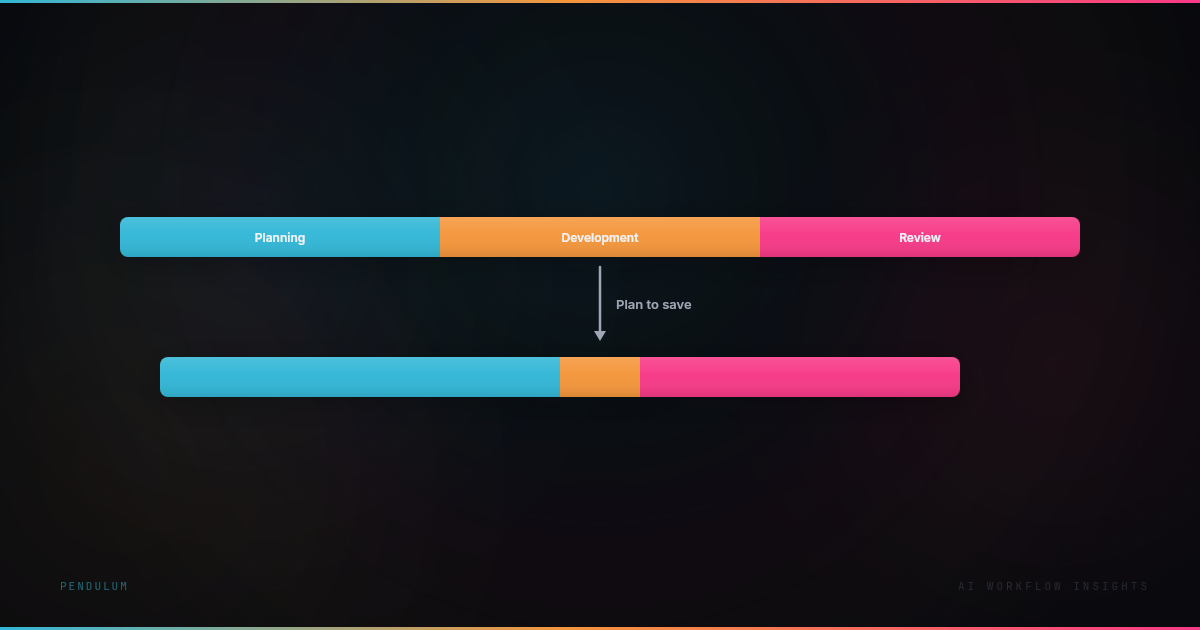
Before AI-assisted development with structured planning, a typical Pendulum project split roughly into three phases: planning and discovery, development and implementation, and review and refinement. Each phase took a comparable amount of time on average.
With plan mode, the distribution shifted dramatically. Planning takes a little longer - roughly 20% more than before. We invest that time in writing precise, AI-consumable specifications. The payoff is in development: build time dropped by around 60%. The AI produces cleaner, more architecturally sound code because it has clear instructions, established patterns, and well-defined boundaries. Review and refinement stays about the same - we still apply the same quality bar.
The net effect is that total project time reduced by approximately a third. Not by cutting corners or accepting lower quality. By frontloading the thinking that prevents rework.
What this means in practice
A project that would have taken twelve weeks now takes eight. The planning phase might go from two weeks to two and a half. Development compresses from four weeks to under two. Review stays at two weeks because we do not compromise on quality, accessibility, or production readiness.
Three to four weeks of saved development time on a single project is significant. Across a year of projects, it compounds into months of capacity. We can either deliver faster or deliver more within the same timeline and budget.
How clients benefit
We pass this efficiency on directly. When build time drops by a third, budgets stretch further. Features that would have been cut from scope to stay within budget become achievable. The "nice to have" list that normally gets triaged out of the first release actually ships.
For clients, this means more product for the same investment. A dashboard that includes the export functionality. A booking system that launches with the referral programme built in. A content platform that ships with the multi-language support rather than deferring it to phase two.
It also means less risk. Shorter build cycles mean faster feedback loops. Problems surface earlier when there is less code to inspect. Architectural mistakes - the expensive kind - get caught in the plan, not in production.
Plan mode is not optional
The temptation with AI is to treat it as a shortcut past planning. It is the opposite. AI makes planning more valuable, not less. The better the plan, the better the output. The worse the plan, the faster you generate technical debt.
Every project we run starts in plan mode. Every brief is written to be consumed by both humans and AI. Every architectural decision is documented before generation begins. This is not overhead. It is the reason we ship a third faster and our clients get more for their money.
If your development process treats planning as a box to tick before the real work starts, you are leaving a third of your budget on the table.